

Do garden hose nuts affect water flow? This is a question that many gardeners, landscapers, and even homeowners who use garden hoses regularly often ponder. As a supplier of high - quality garden hose nuts, I have delved deep into this topic to provide you with a comprehensive understanding.
The Basics of Water Flow in Garden Hoses
Before we discuss the impact of garden hose nuts on water flow, it's essential to understand the fundamentals of water flow in a garden hose. Water flow, measured in gallons per minute (GPM), is influenced by several factors. The pressure of the water source is a primary determinant. A higher water pressure from the faucet or spigot generally results in a greater flow rate. The diameter of the hose also plays a crucial role. A wider hose typically allows more water to pass through compared to a narrower one.
Another factor is the length of the hose. Longer hoses create more friction, which can reduce the water flow. As water travels through the hose, it rubs against the inner walls, and this friction dissipates energy and slows down the water.
How Garden Hose Nuts Fit into the Picture
Garden hose nuts are used to connect different parts of a hose system, such as attaching the hose to a faucet, a sprinkler, or another section of hose. They are designed to create a tight and secure connection to prevent leaks. But do they have an impact on water flow?
The design of the garden hose nut can influence water flow. A well - designed nut will have a smooth interior passage that allows water to flow through without significant obstruction. On the other hand, a poorly designed nut with rough edges, burrs, or a narrow opening can cause restrictions in the water flow.
For example, if a garden hose nut has an inner diameter that is significantly smaller than the diameter of the hose, it will act as a bottleneck. Water has to pass through this smaller opening, which reduces the overall flow rate. This is similar to trying to pour a large amount of liquid through a small funnel; the flow is restricted.
Types of Garden Hose Nuts and Their Impact
There are various types of garden hose nuts available in the market, each with its own characteristics.
- Standard Brass Nuts: These are commonly used due to their durability and corrosion - resistance. A high - quality standard brass nut with a smooth interior finish will have minimal impact on water flow. However, if the nut has been poorly machined and has rough internal surfaces, it can cause some turbulence in the water flow, leading to a slight reduction in the flow rate.
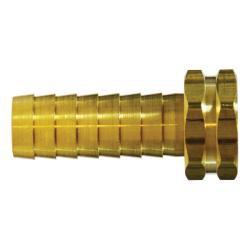
- Rod Brass 2 Shank: This type of nut is designed with a specific configuration. The two - shank design is meant to provide a more secure connection. In terms of water flow, if the internal passage of the Rod Brass 2 Shank nut is properly sized and smooth, it should not cause a significant reduction in water flow. But if there are manufacturing defects or if it is not installed correctly, it could potentially restrict the flow.
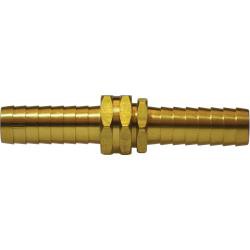
- Rod Brass Long 2 Shank: Similar to the Rod Brass 2 Shank, the long - shank version also offers a secure connection. However, its longer length might introduce more friction if the internal walls are not smooth. Water has to travel a longer distance through the nut, and any roughness can slow down the flow.
Measuring the Impact
To accurately measure the impact of garden hose nuts on water flow, one can conduct a simple experiment. First, measure the water flow rate of a hose without any nuts attached, directly from the faucet to a container. Then, attach different types of garden hose nuts one by one and measure the flow rate again.
It's important to ensure that the hose and the water source conditions remain constant during the experiment. Use a stopwatch and a container of known volume to calculate the flow rate in gallons per minute. By comparing the flow rates with and without the nuts, you can determine the extent of the impact.
Real - World Implications
In a real - world scenario, the impact of garden hose nuts on water flow might not always be noticeable. For light - duty tasks such as watering a small flower bed, even a small reduction in water flow might not affect the performance significantly. However, for larger - scale applications like filling a swimming pool or using a high - pressure sprinkler system, any restriction in water flow can be a problem.
If you're using a high - pressure water source and need maximum water flow, choosing the right garden hose nuts becomes crucial. A high - quality nut with a smooth interior and proper sizing can ensure that you get the most out of your water supply.
Our Role as a Garden Hose Nut Supplier
As a garden hose nut supplier, we understand the importance of providing products that have minimal impact on water flow. We invest in high - precision manufacturing processes to ensure that our nuts have smooth internal surfaces and proper sizing. Our quality control team conducts rigorous inspections to identify and eliminate any defective products.
We offer a wide range of garden hose nuts, including the Rod Brass 2 Shank and Rod Brass Long 2 Shank. Our products are designed to meet the highest standards of quality and performance. Whether you're a professional landscaper or a homeowner looking for reliable garden hose nuts, we have the right solution for you.
Conclusion and Call to Action
In conclusion, garden hose nuts can have an impact on water flow, but the extent of this impact depends on the design and quality of the nuts. By choosing high - quality nuts from a reputable supplier, you can minimize any negative effects on water flow.
If you're in the market for garden hose nuts and want to ensure optimal water flow for your garden or landscaping needs, we invite you to reach out to us. We are more than happy to discuss your requirements and provide you with the best - suited products. Contact us today to start a conversation about your garden hose nut needs.
References
- "Fluid Mechanics for Dummies" by Alistair J. Croll and Jeffrey C. Dorgan.
- Various industry reports on garden hose fittings and water flow.


