

As a supplier of welded hose fittings, understanding the fatigue life characteristics of these products is crucial. Welded hose fittings are widely used in various industries, including automotive, aerospace, and industrial manufacturing. Their fatigue life directly affects the reliability and safety of the entire system. In this blog, we will delve into the key aspects of the fatigue life characteristics of welded hose fittings.
1. Definition and Importance of Fatigue Life
Fatigue life refers to the number of loading cycles that a material or component can withstand before failure under cyclic loading. In the case of welded hose fittings, cyclic loading can be caused by pressure fluctuations, vibration, and mechanical stress during normal operation. Understanding the fatigue life is essential because it helps in predicting the service life of the fittings, preventing unexpected failures, and ensuring the long - term stability of the fluid transfer system.
2. Factors Affecting the Fatigue Life of Welded Hose Fittings
Material Properties
The choice of material for welded hose fittings plays a significant role in determining their fatigue life. High - strength materials such as stainless steel and brass are commonly used due to their excellent mechanical properties. Stainless steel, for example, has high corrosion resistance and good ductility, which can enhance the fitting's ability to withstand cyclic loading. Brass, on the other hand, offers good machinability and electrical conductivity. Different grades of these materials have varying fatigue resistance. For instance, austenitic stainless steel has better fatigue properties compared to some ferritic grades.
Welding Quality
The welding process is a critical factor in the fatigue life of welded hose fittings. A well - executed weld can ensure a strong bond between the fitting and the hose, distributing the stress evenly. Poor welding quality, such as incomplete fusion, porosity, or cracks in the weld, can create stress concentration points. These points act as initiation sites for fatigue cracks, significantly reducing the fatigue life of the fitting. Advanced welding techniques, like TIG (Tungsten Inert Gas) welding, can produce high - quality welds with fewer defects, improving the overall fatigue performance.
Design and Geometry
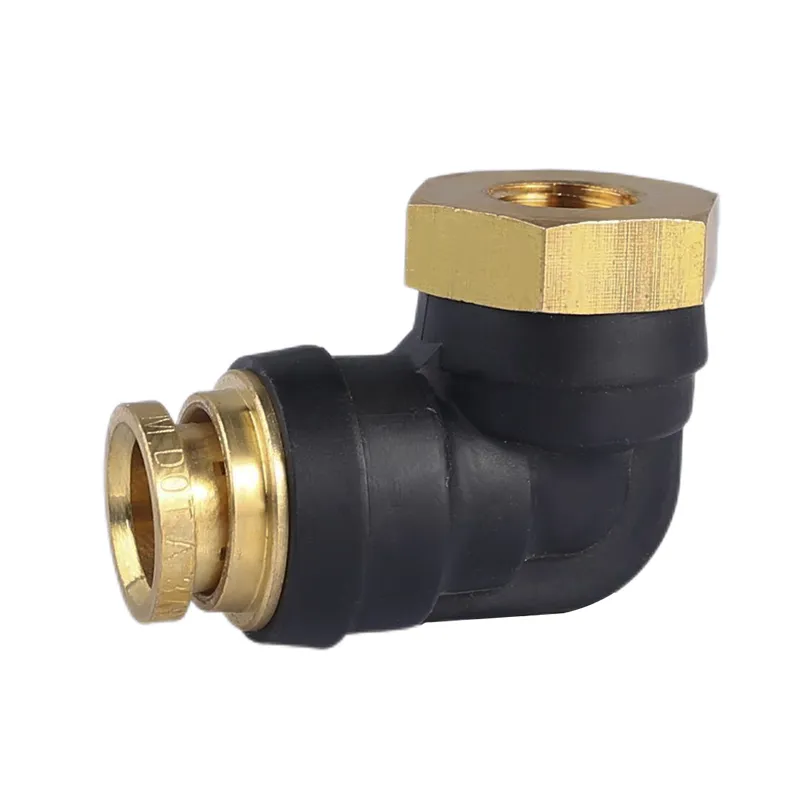
The design and geometry of the welded hose fitting also impact its fatigue life. Fittings with smooth transitions and rounded corners can reduce stress concentration compared to those with sharp edges. For example, a Street Elbow 90° with a well - designed curvature can better distribute the stress during bending, enhancing its fatigue resistance. Additionally, the size and shape of the fitting in relation to the hose can affect the flow characteristics and stress distribution. An improper fit between the fitting and the hose can lead to increased stress on the fitting, shortening its fatigue life.
Operating Conditions
The operating conditions under which the welded hose fittings are used have a profound influence on their fatigue life. High - pressure applications subject the fittings to greater stress, accelerating the fatigue process. Temperature variations can also affect the material properties and the integrity of the weld. For example, extreme cold can make the material more brittle, while high temperatures can cause creep and reduce the strength of the fitting. Vibration, which is common in many industrial environments, can induce cyclic loading and increase the likelihood of fatigue failure.
3. Testing and Evaluation of Fatigue Life
Fatigue Testing Methods
There are several methods to test the fatigue life of welded hose fittings. One common method is the constant - amplitude fatigue test, where the fitting is subjected to a constant amplitude cyclic load until failure. This test provides basic information about the fitting's fatigue performance under a specific loading condition. Another method is the variable - amplitude fatigue test, which simulates real - world operating conditions more accurately by applying a spectrum of different load amplitudes.
Fatigue Life Prediction Models
Based on the test results, fatigue life prediction models can be developed. These models take into account factors such as material properties, stress levels, and the number of loading cycles. For example, the S - N curve (stress - number of cycles curve) is a widely used model that shows the relationship between the applied stress and the number of cycles to failure. By analyzing the S - N curve, engineers can estimate the fatigue life of the welded hose fitting under different stress levels.
4. Case Studies
Let's consider a case in the automotive industry. A car manufacturer was experiencing frequent failures of the air brake hose fittings in their vehicles. After investigation, it was found that the welding quality of the fittings was poor, with many welds having porosity. This led to stress concentration and premature fatigue failure. The manufacturer switched to a new supplier that used advanced welding techniques and high - quality materials. As a result, the fatigue life of the Air Brake Hose Male Adapter increased significantly, reducing the number of warranty claims and improving the overall reliability of the braking system.
In another case from the aerospace industry, a composite female elbow fitting was used in a hydraulic system. The initial design had sharp edges, which caused high stress concentration during cyclic loading. By redesigning the fitting with rounded corners and a more optimized geometry, similar to the Composite Female Elbow 90° Swivel, the fatigue life was extended, ensuring the long - term safety of the hydraulic system.
5. Strategies to Improve Fatigue Life
Material Selection and Treatment
Selecting the right material and applying appropriate heat treatment can enhance the fatigue life of welded hose fittings. For example, heat treatment can improve the material's hardness and toughness, making it more resistant to fatigue. Surface treatments, such as plating or coating, can also protect the fitting from corrosion, which can accelerate fatigue failure.
Welding Process Optimization
Continuous improvement of the welding process is essential. This includes using advanced welding equipment, proper pre - welding preparation, and strict quality control during the welding process. Welders should be well - trained to ensure consistent and high - quality welds.
Design Optimization
Engineers should focus on optimizing the design of the welded hose fittings. This involves using computer - aided design (CAD) and finite element analysis (FEA) to simulate stress distribution and identify potential stress concentration points. By modifying the design based on the analysis results, the fitting's fatigue performance can be improved.
6. Conclusion
In conclusion, the fatigue life characteristics of welded hose fittings are influenced by multiple factors, including material properties, welding quality, design, and operating conditions. Understanding these factors and implementing appropriate strategies to improve fatigue life is crucial for ensuring the reliability and safety of fluid transfer systems. As a supplier of welded hose fittings, we are committed to providing high - quality products with long fatigue life. Our team of experts uses advanced testing methods and design techniques to optimize the performance of our fittings.
If you are in need of high - quality welded hose fittings with excellent fatigue life characteristics, we invite you to contact us for procurement discussions. We can provide customized solutions based on your specific requirements and ensure that our products meet the highest standards of quality and reliability.

References
- Metals Handbook: Fatigue and Fracture, ASM International
- Fatigue of Engineering Materials and Structures, Elsevier
- Welding Handbook, American Welding Society


